

Ponte de Trajano, also known as the Roman Bridge of Chaves, is a granite bridge over the Tâmega River in Chaves, Portugal. You can cross it on foot and see its Roman arches and commemorative columns, then continue into the city centre or explore the area’s heritage.
- Location: Madalena parish, Chaves, Vila Real district.
- From the hotel: about a six-minute walk from this three-star hotel in Chaves.
- Visit: an exterior paved route and an active pedestrian crossing.
- Key features: 18 arches, with 12 currently visible, and two commemorative columns.
Finding Ponte de Trajano
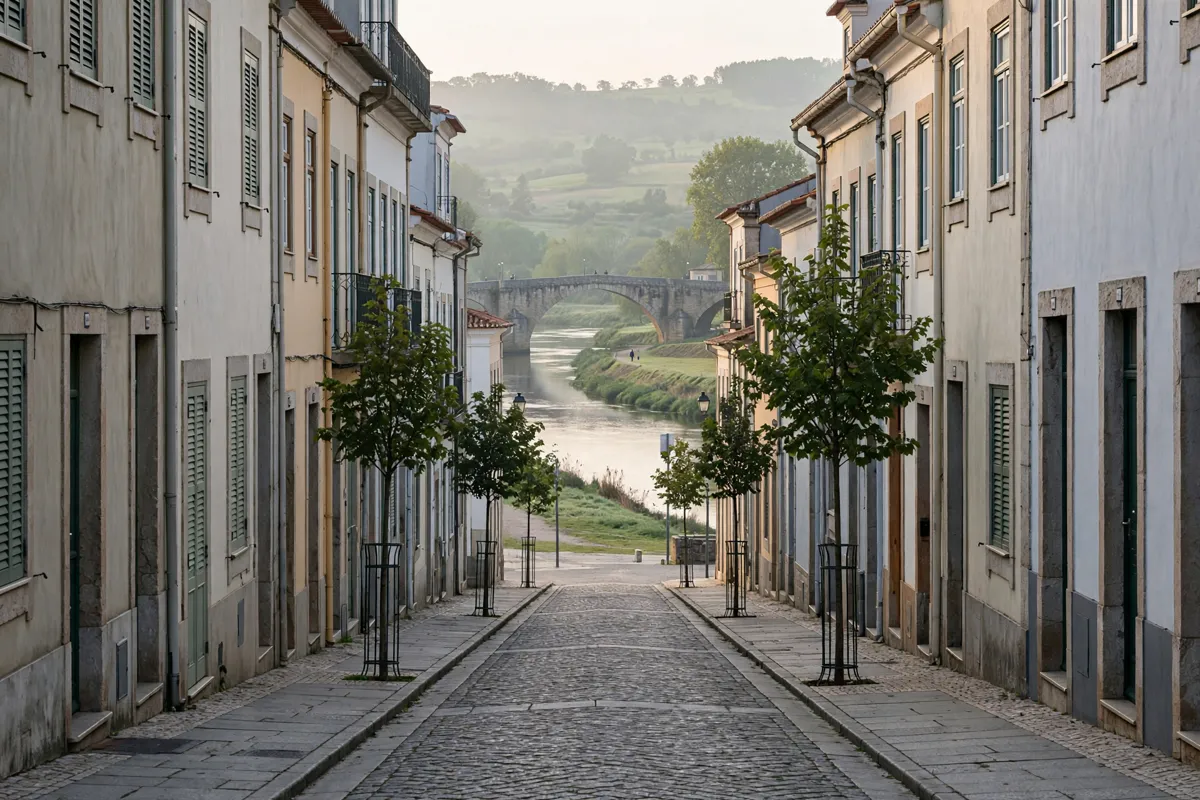
Ponte de Trajano crosses the Tâmega River in Chaves, in the parish of Madalena. Its address is R. Caneiro 47, 5400-541 Chaves. From the city centre, you can make the bridge part of a walk through central Chaves; the approach is through the surrounding urban streets.
The bridge remains a pedestrian crossing, so you can walk across as part of your route rather than treating it only as a viewpoint. If you are planning a broader city stroll, how to walk around Chaves city centre is a natural companion to this visit.
What to notice on the bridge
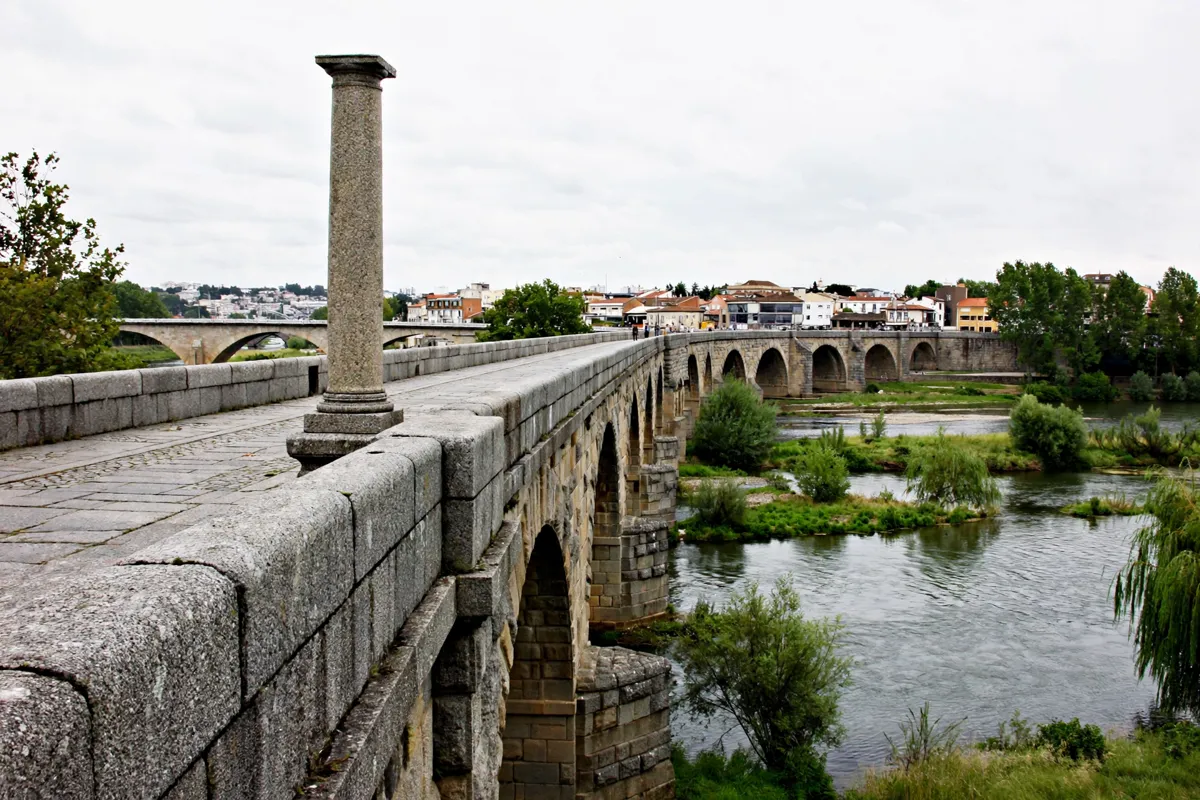
The bridge is built from granite and has 18 arches, of which 12 are currently visible. Six arches are almost completely buried, which helps explain why the surviving structure does not show all 18 clearly above ground. The bridge is 140 metres long.
Look for the two commemorative columns on the bridge. They are associated with the Roman emperors Titus Flavius Vespasian and Marcus Ulpius Trajan. A copy of an inscription dated 79 AD is also displayed there; the original is held at the Museu Flaviense.
The inscription names ten regional peoples: Aquiflavienses, Aobrigenses, Bíbalos, Celernos, Esquesos, Interâmnicos, Límicos, Nebisocos, Quarquenos and Temaganos. The Padrão dos Povos preserves an inscription important to understanding the communities of the region.
The bridge and Chaves’s Roman past
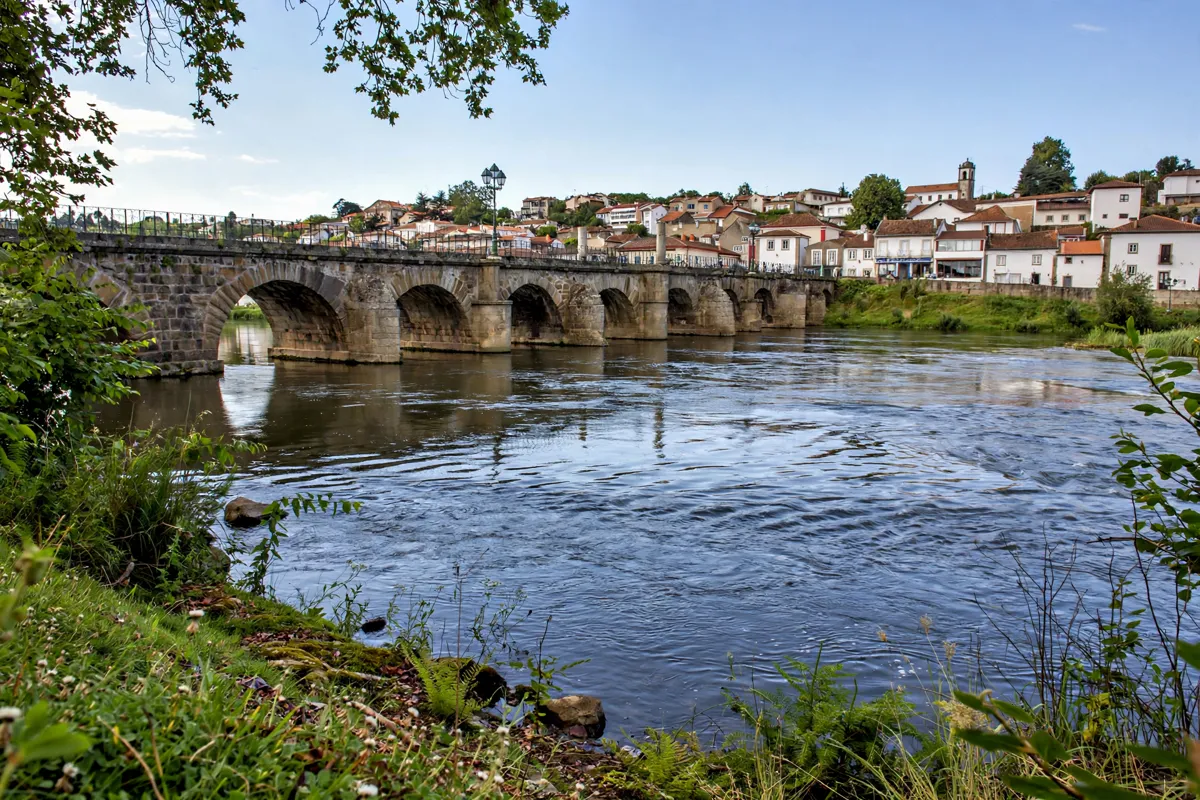
Ponte de Trajano served the Roman settlement of Aquae Flaviae, on the site of present-day Chaves, during the Romanization of the region.
It formed part of Roman Road XVII, a route linking Bracara Augusta, now Braga, with Asturica Augusta, now Astorga, by way of Aquae Flaviae. The nearby Museu Termas Romanas de Chaves adds another Roman-era stop to a visit.
The first commemorative column was completed in 104 AD during Emperor Trajan’s reign, marking the beginning of the bridge’s construction. The bridge and its two columns are classified as a National Monument.
Ponte de Trajano was classified by decree on 16 June 1910, published on 23 June 1910; a decree dated 22 March 1938 classified the Roman bridge and its columns associated with Vespasian and Trajan.
Nearby sights along the river
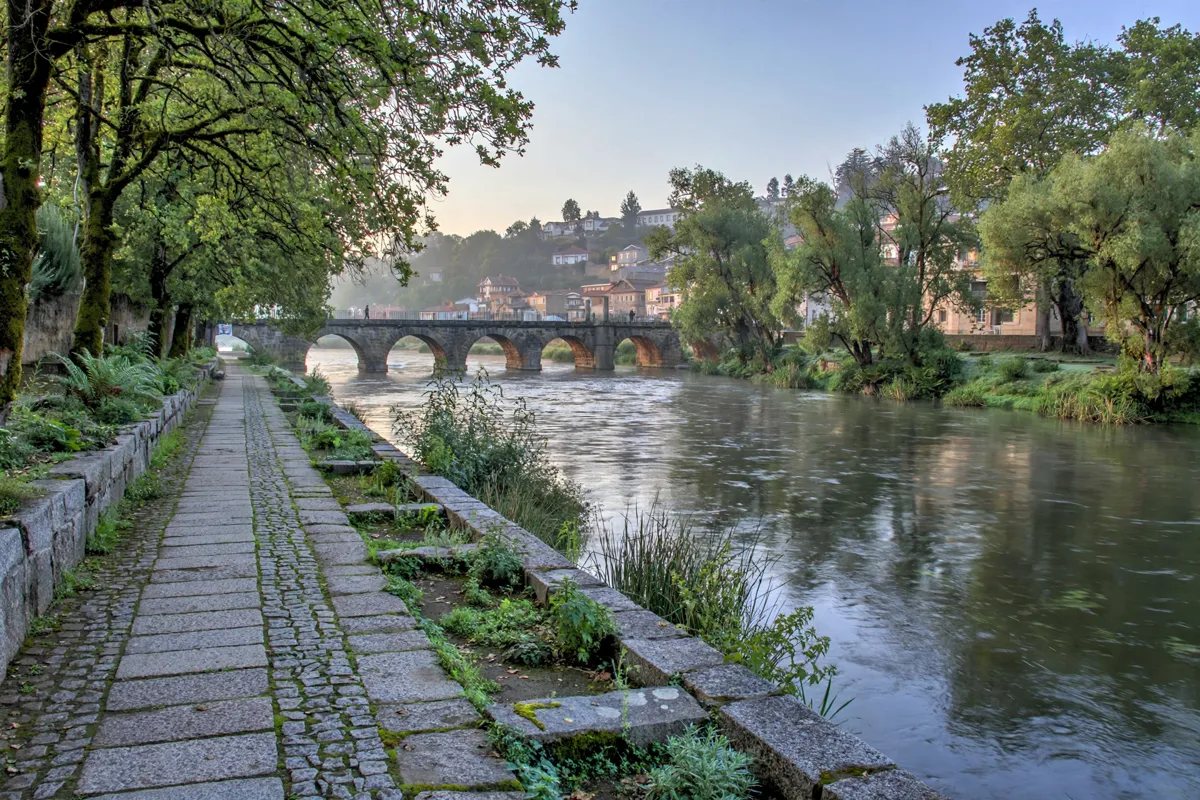
The river and bridge sit within Chaves’s wider collection of city sights. The Jardim Público, Chaves Castle keep and the Tâmega are among places to visit, and the Museu da Região Flaviense is a nearby cultural sight.
You can connect these places into a city-centre outing; how to spend one day in Chaves can help you plan a broader route.
The bridge route is paved, but surface irregularities may occur. If you have reduced mobility, check local conditions before setting out. The protected monument has no stated visitor hours or ticket tariff, so check the official site before you go.
FAQs
Is Ponte de Trajano still used?
Yes. It remains a pedestrian crossing over the Tâmega River, integrated into Chaves’s urban life.
How many arches can you see?
The bridge has 18 arches, and 12 are currently visible. Six are almost completely buried.
What does the inscription on the bridge commemorate?
The displayed copy of the inscription, dated 79 AD, names ten regional peoples. Its original is held at the Museu Flaviense.